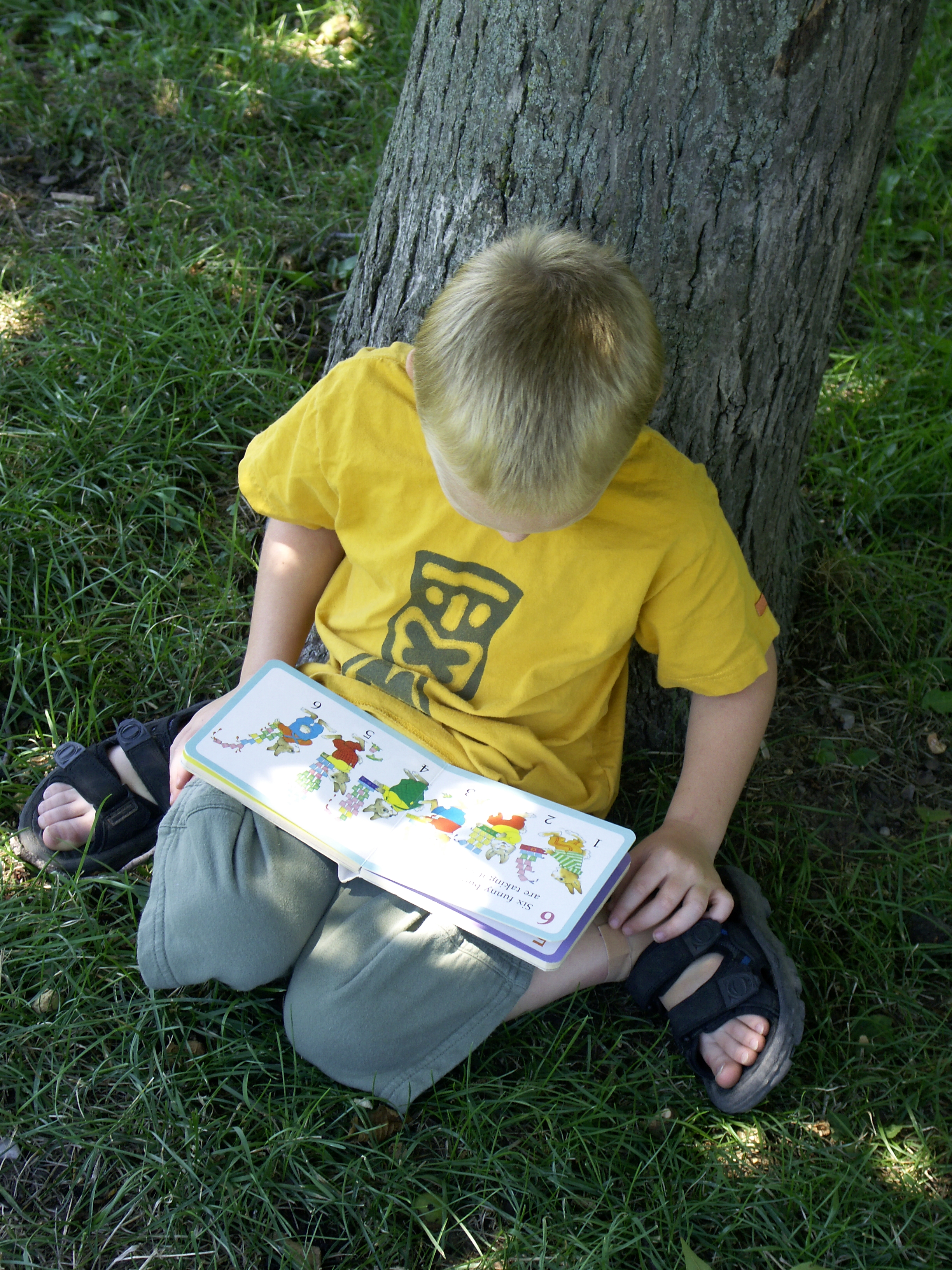
A child reading by a tree

You can set up a system at home to ace summer learning, where learning is fun. It’s a great way you can prevent summer slide. All it takes is three steps!

STEP 1: Get an idea of how your kids learn best.

Check out this learning style quiz! With this quiz, you can pick activities that are presented in a way that your child will be able to engage with. With this new information, together you can set up your home learning environment to support them.

This is an opportunity to brainstorm with your child(ren) and pick activities that spark joy. Learning comes alive with cooking, writing a play, nature walks… the possibilities are endless. Just as your kids’ learning preferences are!

A great workbook with activities is the appropriate grade level of the Summer Bridge Activities workbooks. These workbooks have lessons and flashcards for summer learning, plus physical fitness info, a motivation calendar, and science experiments.

STEP 2: Right-size the amount of time for learning

These are the recommended daily time blocks for summer learning, based on grade level:

  • Kindergarten to 1st Grade = 20-30 minutes
  • 2nd to 3rd Grade = 30-45 minutes
  • 4th to 5th Grade = 45-60 minutes
  • Middle School  = 1.5 hours
  • High School =  2 hours

STEP 3: Make a daily schedule that balances summer learning with summer fun.

I’ve created a template with guidelines for you. And, check out this blog post for more guidance on how to start the next school year in the fall off on the right foot.

See? Easy as 1-2-3.

I hope you enjoyed these steps.

School anxiety can pop up for a variety of reasons. Here are some of the signs to watch for: your child starts asking “what if” questions about school, has a change in sleep patterns, or shows physical symptoms like a change in appetite.

If your child is experiencing anxiety, here are three simple ways to help them melt their worry and grow their self-confidence:

Reframe “smart.” 

There are many ways to be smart. And, your child’s ultimate success in life is not solely determined by their performance relative to their grade level. 

Work with your child to make a list of strengths that have nothing to do with grades. Consciously affirm and reinforce them to keep optimistic thoughts top-of-mind. 

Show them one-size-does-not-fit-all. 

Figure out your child’s learning style with a quiz. It’s fun to have the whole family take a quiz, to make it clear that there is more than one learning style.

Once you know your child’s learning style, you can better support their individual strengths and find more opportunities for growth in and out of the classroom. 

Help them with their “anticipatory anxiety.”

A child’s mind with anticipatory anxiety is a mind full of “what ifs.”

When you help our child name their worries, you can acknowledge their fear and help them build coping tools. 

  • Learn to reframe the fear, if possible, and develop positive counter-thoughts. 
  • Visit the school during off-hours to run through classroom changes.
  • Set up a parent-teacher-child conference and bring their what-if questions to the meeting.  

Whatever your approach to managing school anxiety, take your child’s concerns seriously and watch their feeling of safety and security blossom.  

Good luck! And remember, progress over perfection. 

Summer is officially here!

While I am sure you’re excited to have more time to spend with your children at home, it can be a daunting task filling those longer days and curious minds with entertainment. So I have put together a few simple suggestions of summer activities the whole family can engage in together. Let’s fill these summer days with activities that will build memories for everyone!

family summer

Enjoy the Great Outdoors

Take advantage of the warmer weather and head outside. Nature provides endless opportunities for your child to explore and learn. Consider visiting local botanical gardens, zoos, and nature parks. If you’re short on time, take a walk around your neighborhood. If you’re more athletic or want to make a day out of it, take the family on a hike and pack a picnic lunch.  Click here for The Best Los Angeles Area Hiking Trails for Families.

According to the American Academy of Pediatrics, “Sixty minutes of daily unstructured free play is essential to children’s physical and mental health.” In addition to the obvious fitness benefits, exposure to green spaces has even been shown to help reduce ADHD symptoms, stress levels, and anxiety. Spending time outdoors can improve your child’s critical thinking, social interactions, sleep, and even vision, so be sure to head into the sunshine regularly this summer break!

Schedule Play Dates

During the school year, it’s often difficult to set up one-on-one social engagements. There always seems to be multiple competing schedules! With the summer break, there’s plenty of free time AND a real need for socializing. While your child may get to connect with his/her peers at school, the summer can be isolating without that daily interaction. Instead of falling back on digital entertainment like movies and video games to fill the void, create opportunities for your children to connect face-to-face with their friends.

Here are 5 simple steps tips for planning a summer play date. And to keep any damage to the inside of your clean house to a minimum, organize some backyard games like these or these (which offer some great rainy day options). This way you can keep the fun contained without dampening the spirit.

Involve Your Child In Decisions

If you’re planning a family vacation, why not involve your child in the process?  Depending on their age, you can ask them to: calculate the cost of the trip, determine which package is the better deal, choose the location or side excursions (determined by price), chart out the driving route, plan a picnic lunch for the car ride, or choose road trip games to play. Take a look at this Wall Street Journal article to see how other parents made this idea a reality and how you can best guide your child as they take a more active role in your family activities.

Teach Your Child To Cook

It’s never too early to teach your child about healthy eating and important life skills. While initially it may take longer to get them used to the kitchen and its rules (safety first always!), summertime is ideal for testing out the waters. You’re not nurturing the next Master Chef Junior. Think of it as teaching your children some basic cooking skills so they can, at the very least, make themselves a simple breakfast if they get up before you in the morning. Here are some easy recipes for kids.

Set Out On An Imagination Adventure

This is the perfect time of year to read new books with your children. If leisure reading was put on the back burner during the school year, make it a priority in your house again this summer. Schedule a time each week for the whole family to relax together with a book. And you’ll already be prepared with one more activity for rainy days!

Here are some book lists by age:

What do you have planned to fill those long, sunny, summer days? Let me know in the comments below, and we can add to the list!

Resilience is an essential life skill, yet it is hard to give a child the opportunity to learn it.

As a parent or an educator, our instinct is often to shield children from failure or struggle. We hope to prevent them from taking the same missteps we took in our past.

But does this protection do more harm than good? We learn more from our failures than we do from our successes, so are we robbing children of important life lessons when we try to “fix” things for them?

I share my thoughts on the role of failure and how to foster resilience in this week’s video message below.

The instinct to help our students or our children when it looks like they’re “failing” can be a strong one. But what if I told you that resisting the urge to step in and help is one of the best things that you can do for your young person? Letting them work out problems on their own is an invaluable skill that they’ll use for their entire life.

In this video, I address how to foster resilience in children.

“I have not failed. I’ve just found 10,000 ways that don’t work,” Thomas Edison


It’s also important to remember that not everything has to be labeled as a failure! It could just be a roadblock, a change in direction, or even an experiment. When things don’t go as planned, try not to rob your young learner of the opportunity to ‘readjust.’ Remember to let children first try something by themselves, at a level that is age-appropriate, and step in only when they really need your guidance. Failure is an integral part of the path to growing up.

Now, I want to hear from you. How do you feel about this new way of reacting to your child or student’s struggles? How are you teaching them to be resilient already?

Let’s continue the conversation in the comments and on social media.

Today, I want to touch on one of those life skills that does not get enough attention: boundaries. Boundaries sound good and easy in theory, but it takes courage, consistency, and more than a little patience to enforce them.

Still, the struggle is worth it. Not only do boundaries help you stay in alignment with the behaviors, actions, and values that are important to you, but they also provide essential structure for your child.

We all know that kids’ brains are like sponges, so maintaining consistent boundaries sets an example for your child on how to manage their time, health, and social activities in a productive way.

It’s totally normal for our busy lives to get off track. Here are two of the most common ways that your child may push the boundaries, and how to regroup and reaffirm a healthier, happier environment for your child to learn and grow.

1) Bedtime Battles

It may not seem like a big deal to let your child stay up “just a few minutes more, Mom,” but 5 minutes can easily snowball into an hour. And without proper rest, the next day, everything from the morning routine to the drive to school through the end of classes will be met with greater resistance and less focus and energy.

Suggestion: Design a nighttime routine with your child to help ensure they head to bed by the appointed hour. There will be less of a “because I said so” energy if they are involved in the planning and feel a part of the process.

2) Electronic Interference

I hear many parents complain about their children playing video games until all hours of the night or constantly on their phones. While it may feel impossible to separate your child from their electronics, there are proven ways to find a middle ground.

Suggestion: Create no-phone zones in your home, like the dinner table or bedroom, where everyone (that means you too) needs to put away the small screen and connect with one another irl (that stands for ‘in real life’ for us older adults! 😉).  For video games, instill a schedule of when and how long game time can last. Pro tip: When the console is not in use, unplug it.

What other ways do you and your child butt heads about rules and boundaries? What ways have you found common ground together? Let me know in the comments below.


When parents first realize that their child has a learning disability or challenge, the amount of information that comes at them – from school staff, other parents and friends – can be so overwhelming.  It’s difficult to discern which information is credible and where to focus their efforts first.

The bottom line for most parents is practical application. Will your child get the education and support they need? And this is exactly where the support of an Educational Therapist (ET) comes in.

That’s why I want to attempt to demystify the process of finding help when your child is struggling with the learning process.

An ET can provide your child and your family with the support they need.

This week, I want to attempt to demystify the process of finding help when your child is struggling with the learning process. 

Everyone defines ‘therapy’ a little differently. As the Association of Education Therapists (AET) states, “Educational therapists combine educational and therapeutic approaches for evaluation, intensive individualized intervention, case management, and advocacy on behalf of children, adolescents, and adults with learning disabilities or other learning problems.” Educational Therapy goes far beyond traditional tutoring. We’re educators trained to provide educational solutions for your child’s needs and to assist you in making important decisions about your child’s education.

To help illustrate the work of an Educational Therapist, let me share a coaching story with you…

A couple recently found me at the recommendation of their private school when their child – we’ll call her Jill – was unable to pass the necessary kindergarten placement test. There was only a very short window of time to complete this test before the school year began, and Jill’s parents did not have a clear view of their Plan B. They were not sure what services were available at the school they were applying to and/or what other options might be available at an alternative site. In addition, they weren’t even really sure what their child was struggling with in regards to learning.

I understand how this new development can be upsetting and/or disappointing. It’s scary enough for any parent when their child begins a new school year. So it’s totally normal (and very common!) to feel a bit of panic or even guilt when you add in managing all the aspects that come with your child having a learning disability or challenge.

As an Educational Therapist, I help ease your fears by demystifying those unknowns.

In Jill’s case, I explained my assessment procedure to the parents. While I do administer some formal and informal assessments, I do not diagnose. I can explain and show parents where their children struggle academically, what specific challenges their child may struggle with, and what I could do to help improve their existing skills and support the child.

With Jill specifically, she was not yet at the place in her academic development to join the school her parents had hoped she would attend from kindergarten onward. Placing Jill in a more supportive, less academically rigorous environment, at least for a couple of years, turned out to be a better fit for their child. In addition, this school was a public school, rather than private.

Why?

Public school comes with built-in assessment, IEPs, and staff support that you’re already paying for with your taxes. You should take advantage of those opportunities, even if you just utilize the assessment available and do not end up attending the school. I helped make a plan for Jill and her family, and we began working together immediately.

Situations like this are speed bumps and detours, not dead ends.

Just like Jill, who is successfully settling into her new school and appropriate educational environment, your child can begin to close the gap between their skills and expectations with the proper supports in place.

There are professionals available to you who can help you understand and manage any learning disability or challenge your child may have. To find an Educational Therapist in your area, please visit aetonline.org. From this database, you can view a variety of Educational Therapists with different specializations.

If you’re in the Los Angeles area, I’d love to meet with you and your student to see how I can help in your journey.

What other questions do you have about the role of an Educational Therapist, and how they may help you and your family? Let me know in the comments below.

Linking Your Child to Academic Success and Self-Confidence.

Blog

Contact Us

Services

about

Home